In modern nursing, we have access to high-tech pain management, but sometimes the most effective relief comes from traditional, time-tested methods. Hot fomentation—the application of local moist heat—is one such therapy. It remains a powerful tool in a nurse’s arsenal for managing localized pain, inflammation, and muscle spasm.
By using heat and moisture, we can penetrate deeper into the tissues than dry heat alone, providing both physical relief and profound comfort to the patient.
What is Hot Fomentation?
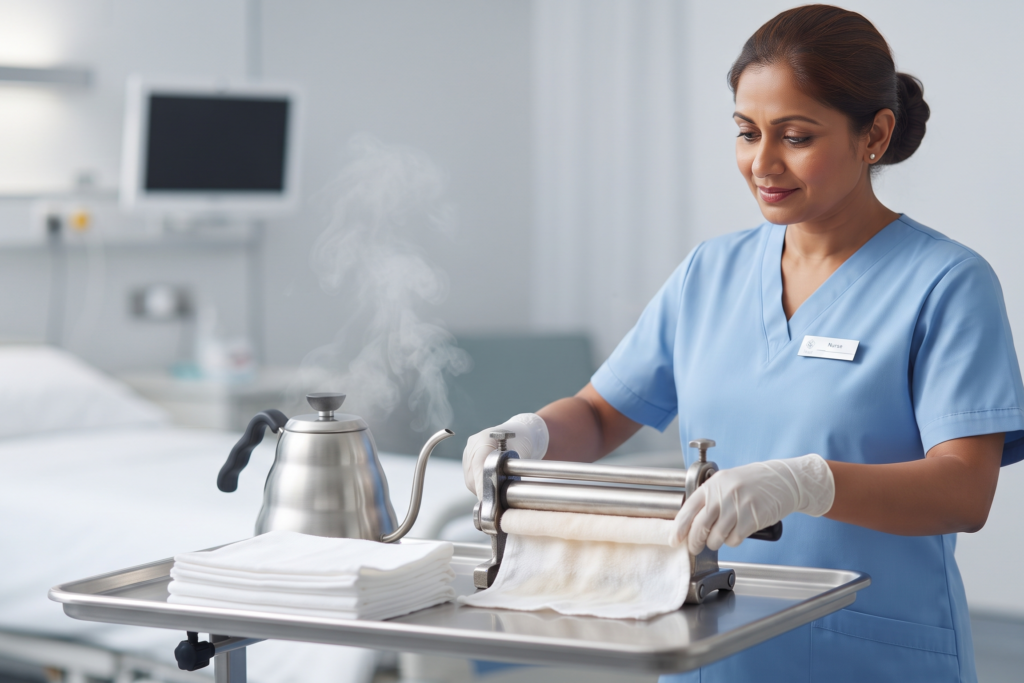
Hot fomentation is the application of moist heat to a specific part of the body using thick pieces of flannel or soft material that have been soaked in boiling water and wrung out. The heat is then “locked in” using layers of waterproof material and wool to keep the compress warm for as long as possible.
Therapeutic Purposes
Why do we still use this classic technique? It is highly effective for:
- Pain and Congestion: Relieving deep-seated aches and reducing internal congestion.
- Inflammation: Helping to reduce swelling in joints or soft tissues.
- Muscle Spasm: Relaxing the muscles, which is particularly effective for intestinal or renal colic.
- Urinary Retention: Applying heat to the lower abdomen can help stimulate bladder function.
- Wound Care: Using sterile compresses to promote healing or suppuration (pus drainage) in infected wounds.
Understanding the Classification
Not all fomentations are identical. We classify them based on the objective:
- Simple Fomentation: Uses plain boiling water. Ideal for basic comfort and muscle relaxation.
- Medicated Fomentation: Involves adding medicinal agents to the water. Applied to unbroken skin, it’s often used to treat abdominal distension (tympanites) by relaxing spasms and stimulating peristalsis.
- Surgical Fomentation: This is a sterile procedure applied to broken skin or open wounds. The goal is to reduce pain and inflammation while accelerating the healing process.
Critical Safety Guidelines
Heat can be dangerous if mismanaged. To protect the patient:
- Skin Integrity: Ensure the skin is intact before using medicated solutions.
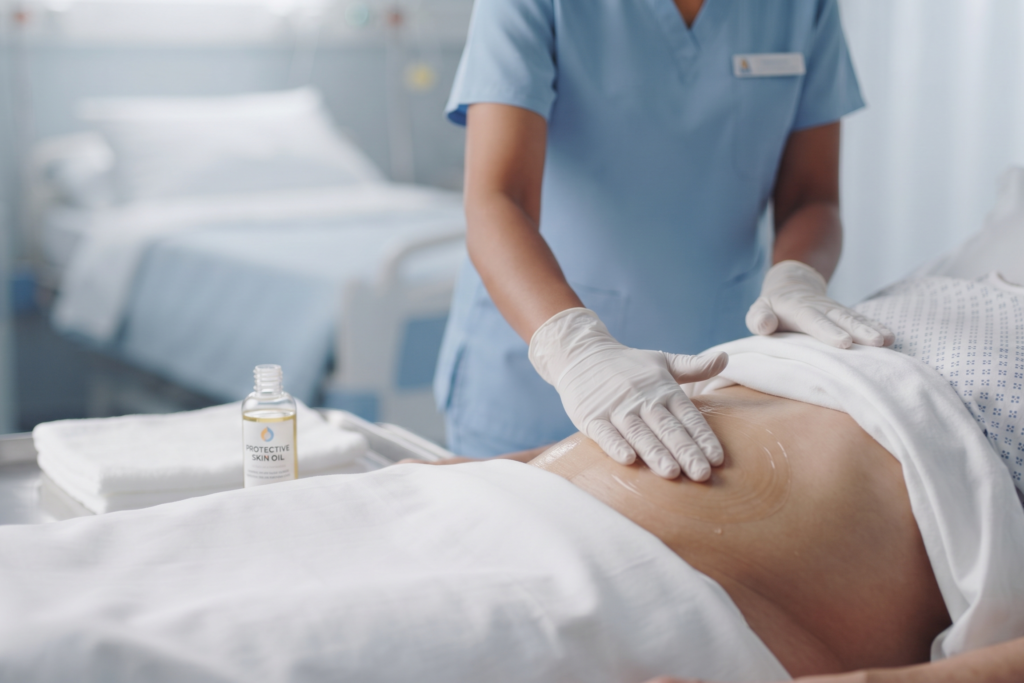
- Prevention of Scalding: Always smear the area with Vaseline or olive oil before application. This creates a protective barrier.
- Continuous Warmth: If there is a delay between removing one compress and applying the next, cover the area with warm, dry cotton to prevent the patient from feeling a sudden, uncomfortable chill.
Preliminary Assessment
Before starting, perform a quick “safety check”:
- The Order: Confirm the doctor’s specific instructions regarding duration and frequency.
- Contraindications: Ensure the patient doesn’t have sensory deficits (numbness) that could lead to accidental burns, or conditions like DVT where heat is contraindicated.
- Self-Care Ability: Can the patient communicate if the compress is too hot? If they are sedated or confused, you must be doubly vigilant.
The Procedure: Step-by-Step
- Preparation: Explain the procedure. Privacy is important, as you will be exposing areas like the abdomen or back.
- Positioning: Ensure the patient is comfortable. Place a Mackintosh and towel under the area to protect the bedding from moisture.
- The Application:
- Protect the skin with oil.
- Wring the flannel out thoroughly—it should be hot but not dripping, as excess water causes burns.
- Test the heat on your own inner wrist first.
- Apply the compress gently, covering it with wool or a dry towel to retain the heat.
- Monitoring: Check the skin condition every few minutes. If it becomes excessively red or blistered, remove the application immediately.
Documentation
Aftercare is vital. Once the procedure is done, ensure the skin is clean and dry. Document the treatment in the patient’s nursing notes, including the site of application, the duration, the patient’s tolerance, and any observed changes in their condition (e.g., “Patient reports significant reduction in abdominal cramping”).