
In the busy environment of a hospital ward, a back rub or back care session is often one of the most underrated nursing interventions. While we focus heavily on medications and diagnostic procedures, the simple act of performing back care is a vital component of holistic nursing. It is not just about hygiene; it is a therapeutic bridge that provides physical relief, improves circulation, and offers emotional comfort to a vulnerable patient.

What is Back Care?
Back care is the structured process of cleaning, inspecting, and massaging a patient’s back, with a specific focus on high-risk pressure points. Whether you call it a back rub, a back massage, or back care, the goal remains the same: to promote skin integrity, relieve muscle tension, and provide a moment of human connection that reassures the patient they are being looked after.
Why We Do It: The Therapeutic Purpose
Beyond the obvious benefit of cleanliness, effective back care serves several clinical roles:
- Preventing Pressure Sores: It is the frontline defence against tissue breakdown.
- Improving Circulation: Stimulating blood flow helps oxygenate tissues and prevents stasis.
- Relaxation & Fatigue Relief: It physically relaxes tight muscles and reduces the emotional stress of hospitalisation.
- Skin Assessment: It provides an opportunity to inspect the skin for early signs of redness, lesions, or irritation that the patient might not be able to see themselves.
- Promoting Rest: A back rub at bedtime is a powerful, non-pharmacological way to help a patient transition into sleep.
Clinical Guidelines for Nurses
A good back rub isn’t just about movement; it’s about technique and safety:
- Consistency: Back care should be a standard feature of both morning and evening nursing rounds.
- Frequent Pressure Relief: For bedbound patients, pressure points must be attended to even more frequently, and position changes should be integrated into the routine.
- Matching the Medium to the Skin:
- For Dry Skin: Use oil or lotion to lubricate and soothe.
- For Greasy, Moist, or Incontinent Skin: Use spirit (alcohol-based rub) or powder. Spirit toughens the skin, while powder reduces the friction that can lead to maceration or breakdown.
- The Technique: Always use upward strokes (towards the head) with firmer pressure and downward strokes with lighter pressure. This follows the venous return of the blood.
- Contraindications: Always check the patient’s history. A back rub may be contraindicated for patients with suspected deep vein thrombosis (DVT) or clotting disorders, as deep pressure could potentially dislodge a clot.
The Preparation
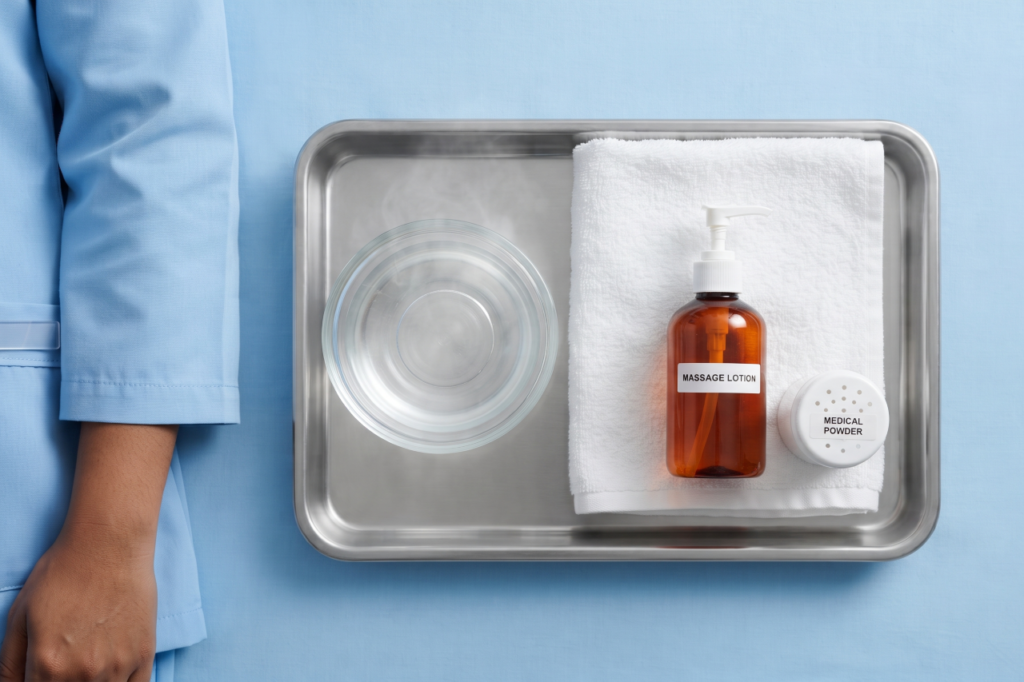
Ensure your tray is complete before entering the room to maintain patient comfort:
- Basin of warm water and two clean sponge cloths.
- Mild soap and a clean towel.
- Surgical spirit, back-rub lotion, or powder.
- Mackintosh (waterproof sheet) to protect the bed linen.
- Kidney tray and paper bag for waste.
The Step-by-Step Procedure
- Preparation: Wash your hands and explain the procedure clearly to the patient. Even if the patient is confused, explain what you are doing.
- Privacy & Positioning: Screen the patient properly. Assist them into a comfortable side-lying (lateral) position.
- Protection: Lower the top bedding just enough to expose the back. Place the towel and mackintosh under the patient’s back to keep the bed dry.
- Cleansing: Wash the back thoroughly from the cervical spine (neck) down to the coccyx (tailbone). Soap, rinse, and dry the skin completely—never leave the skin damp, as moisture promotes breakdown.
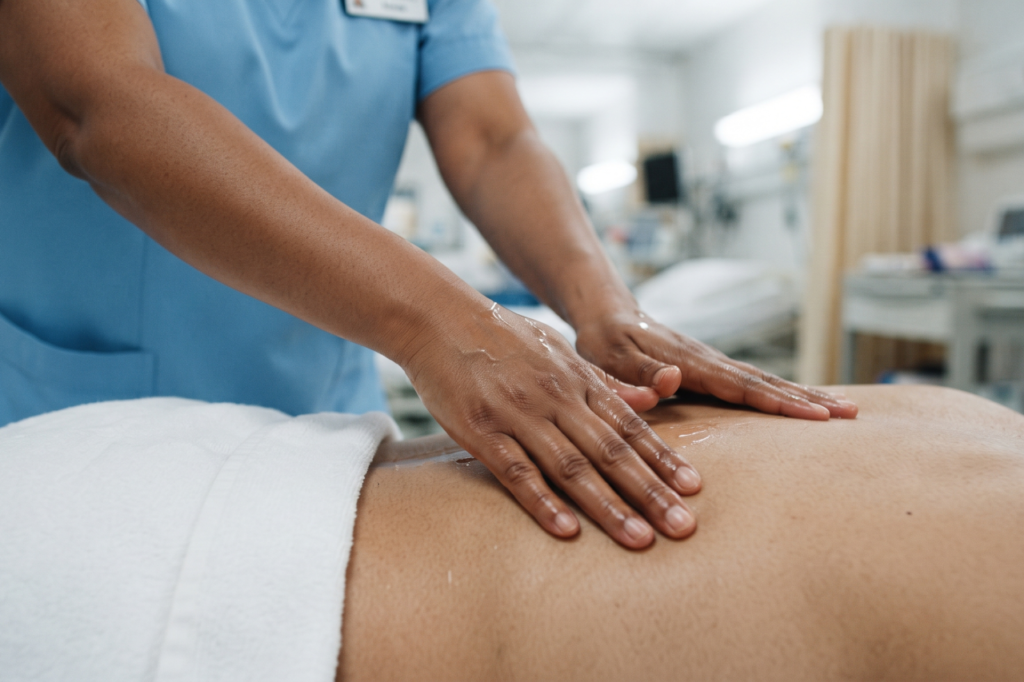
- The Massage: Apply your chosen lotion or spirit. Use firm, rhythmic, and slow strokes on either side of the vertebral column. Move up the back to the neck, across the shoulders, and then glide gently back down.
- Focus on Pressure Points: Spend three to five minutes focusing on bony prominences, such as the scapulae, sacrum, and iliac crests.
- Finishing Touches: If using powder, apply it only after the skin is thoroughly dry. Replace the bedding and ensure the patient is in a comfortable position.
Documentation and After-Care
The procedure isn’t done until it’s documented. Clean and restock your equipment for the next user. In the nurse’s record sheet, document:
- The date and time.
- Any observations (e.g., “Skin intact,” “Redness noted over sacrum,” “Patient reported muscle pain”).
- The intervention performed.
Professional Photo Script for the Article
| Stage | Visual Description | Caption |
| Setup | Tray with basin, soap, towels, lotion/powder, and mackintosh. | Organise your tray completely before beginning to ensure a seamless flow. |
| Positioning | Patient on their side, back exposed, protected by a towel. | Proper positioning is essential for patient comfort and access to the spine. |
| Cleansing | Using a warm, damp sponge to wash the back. | Always ensure the skin is thoroughly dried after cleansing to prevent maceration. |
| Massage | Nurse’s hands using long, firm upward strokes along the spine. | Use firm upward strokes to stimulate circulation and lighter downward strokes for relaxation. |
| Assessment | Close-up of nurse inspecting the sacrum/pressure points. | Use this time to carefully assess for any early signs of skin breakdown. |